

A Global Movement to Transform Child Welfare
Some insights from the launch of the Global Charter on Children's Care Reform

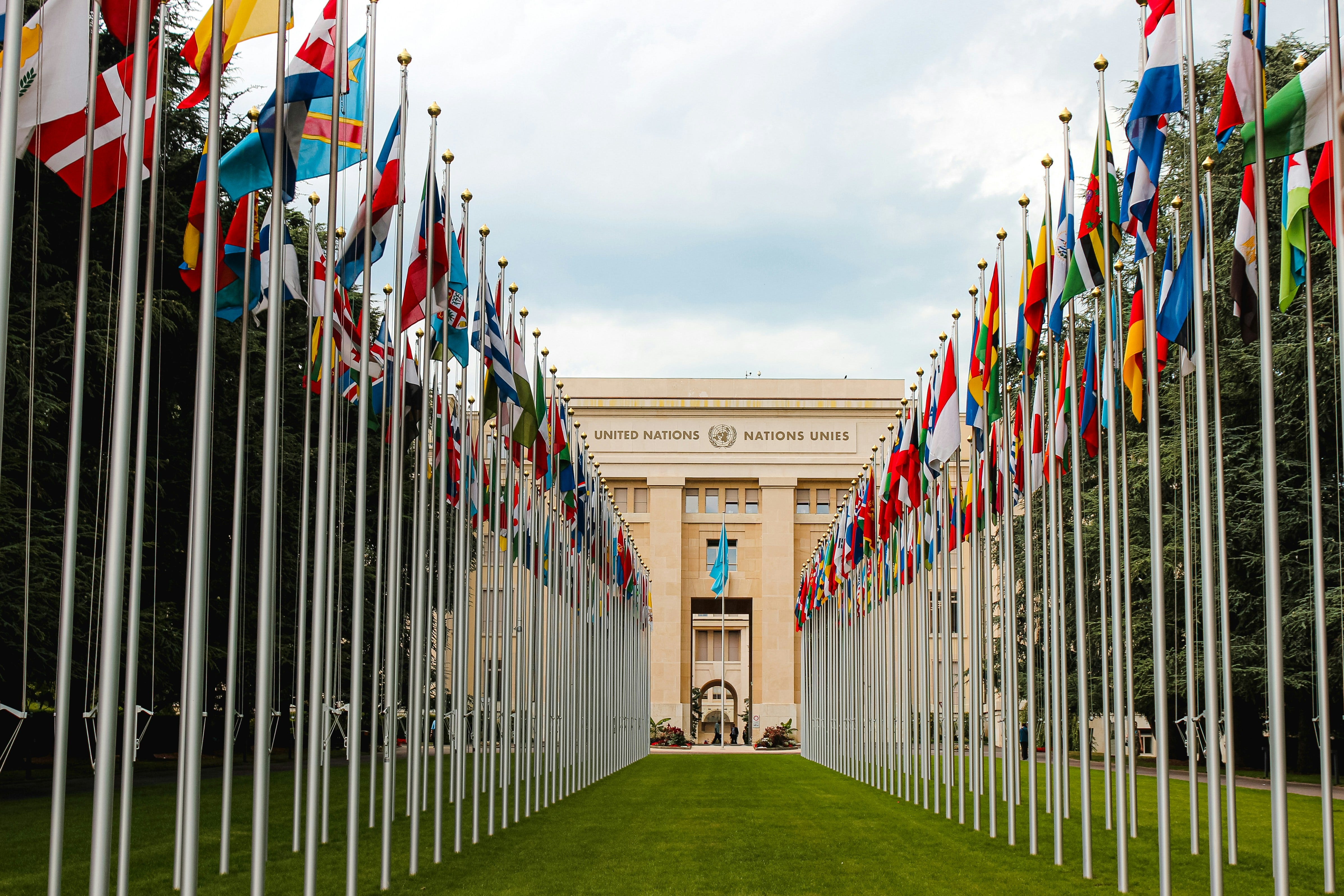
Folks, I am interrupting my series on prevention to write about a very special experience and a very important campaign. A month ago, the UK government launched the Global Charter on Children’s Care Reform during the 80th session of the United Nations General Assembly.
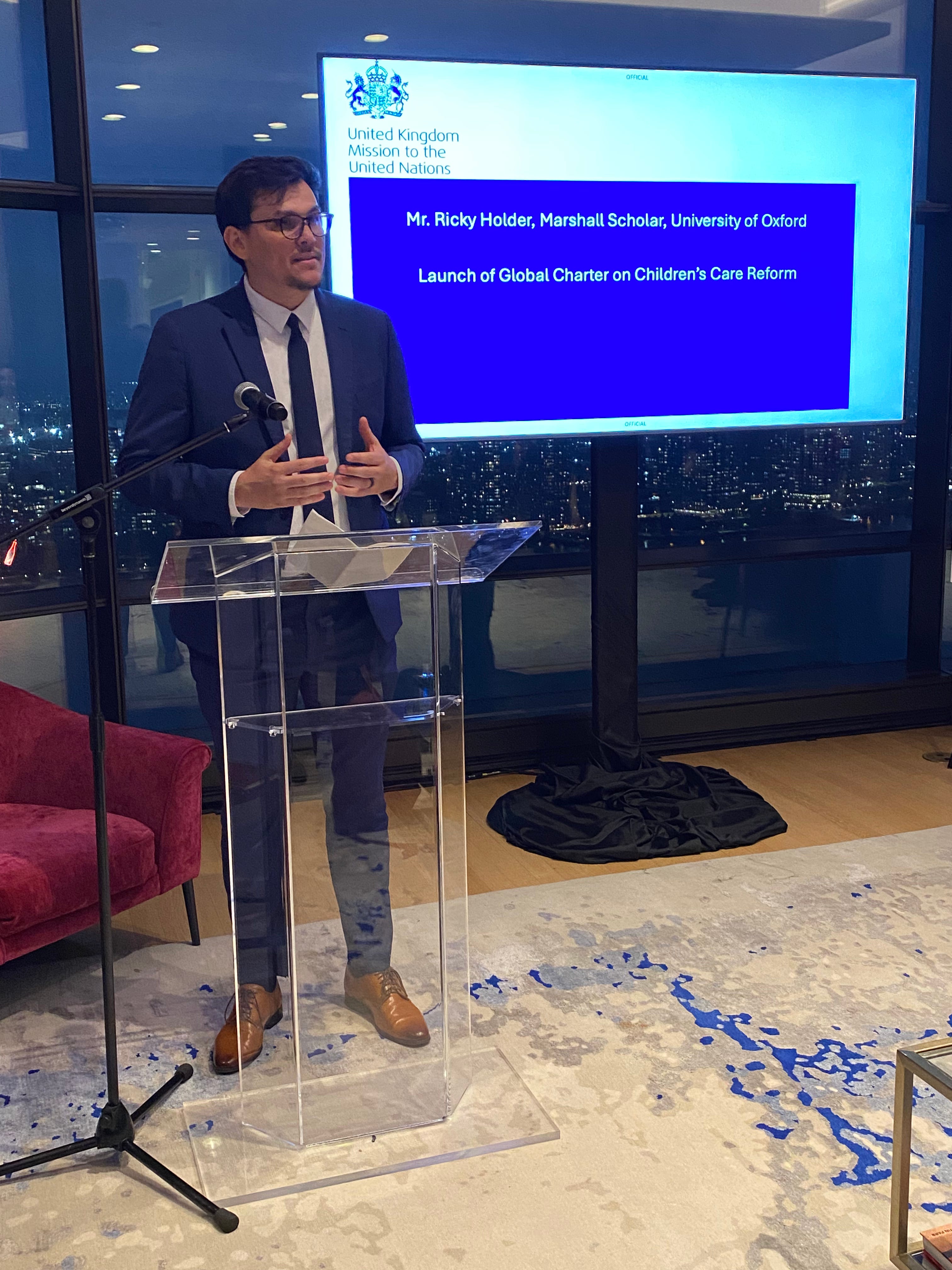
I, Ricky Holder, was invited to speak at this launch. Needless to say, I eagerly accepted this honor. It was a very moving, very motivating, and very meaningful night, and I know I won’t soon forget it.
Since posting about this experience on LinkedIn, I’ve had so many folks reach out and ask me how it went, with several wanting to learn more about the Charter itself. So, instead of answering each of these folks one by one, I figured I’d write about it all in this newsletter.
So, let’s dive in!
A Brief Overview of the Global Charter on Children’s Care Reform
Technically, the UK government launched this initiative way back in January, when the then-Foreign Secretary David Lammy flew with actor Barry Keoghan to Bulgaria. Keoghan — the Oscar-nominated actor perhaps best known for his role in The Banshees of Inisherin — grew up in care himself. From ages 5 to 9, he lived in fourteen homes, bouncing around the system in Dublin with his brother. He is an excellent person to speak on this subject, given this background.
Below is a short video from that trip to Bulgaria, where they discuss their reasons for supporting the cause, hear from local advocates about the country’s progress in closing orphanages and expanding family care, and reflect on what it will take to make that vision global.
In short, this campaign seeks to accomplish three separate but interrelated goals:
strengthen families and prevent unnecessary separation
ensure safe, family-based alternative care
end the use of institutions for children around the world
Countries are being asked to align their national child protection strategies with the above three goals. They are not being asked to implement specific policies or spend a certain amount of money, but rather demonstrate leadership by prioritizing the implementation of the goals above using whatever blend of policies, practices, and funds that are most appropriate for their country context. Signatories are encouraged to share updates, lessons learned, and experiences with the global community, while also participating in exchanges to showcase progress in meeting these goals.
It might be helpful to toss some statistics in here, just to demonstrate how important it is that countries sign this Charter:
Across the globe, over 5.4 million children are living in institutions, and children with disabilities are 17 times more likely to be placed in such settings.
According to UNICEF, an estimated 96 per 100,000 children live in residential care (largely orphanages) worldwide.
While global estimates on the number children in foster care are hard to come by for a variety of reasons, approximately 399 per 100,000 children in industrialized countries (a designation that includes 39 mostly high-income countries) were in foster care in 2017.
So, this Charter and Campaign is desperately needed. Kids should be kept with their families whenever possible, but if they do need to go into care, they shouldn’t be placed in an institution or an orphanage.
Since the launch in January, David Lammy has earned a promotion: he is now the Deputy Prime Minister of the UK (essentially the Vice President of the UK). As of this month, 30 nations are listed as alliance partner countries. From Brazil to Uzbekistan, Zambia to Ireland, countries are committing themselves to building a better world for children in families.
The Deputy Prime Minister, working in conjunction with his old department, decided to use the 80th General Assembly of the United Nations to ‘officially’ kickstart the campaign. Representatives from several countries, the head of UNICEF, and various child protection organizations were invited, as was (most importantly) folks with lived experience in care. This is where I come into the story.
My Speech: Spurring Countries to Sign the Charter
I won’t delve into the specifics on how I got involved in this campaign and with this event — long story short, the scholarship I received to study at Oxford is housed within the very same department that the Deputy Prime Minister used to lead — but I will talk about what my involvement entailed.
Put simply, I was tasked to galvanize the participants to sign this charter. I was asked to give a rousing speech, predicated on my lived-experience and shaped by my studies, to attendees. So that is precisely what I did (or hoped that I did).
I won’t reproduce my entire speech here, but here were my key points:
I spoke of being raised in poverty, and how this poverty was directly responsible for undermining my family and sending my brothers and I into the foster care system.
I talked about what the system did to us. Specifically, I spoke about how my brothers — the heroes of my childhood — were transformed from bright-eyed boys into angry young men. I spoke about how they were placed in group homes almost immediately upon entry. As folks here know, group homes have historically been known as places to warehouse the children that no foster families want. Their only sin at the time was that they were teenagers.
I outlined the path that my brothers took through the system, bouncing from group home to group before being spit out into the word as broken men, struggling to extricate themselves from the very outcomes that anyone with a glancing familiarity with foster care (and group homes) knew were coming.
I talked about my own experiences in care: about the half a dozen homes I lived in, about the countless social workers I had, about the maltreatment I experienced, and about the crushing loneliness that defined that decade.
I briefly outlined the research I conducted at Oxford, and spoke a hard truth to a room full of leaders aiming to transform their child welfare system: we are falling short. As a global community, so many countries (rich and poor, east and west, north and south) are struggling to keep kids safe and keep families together.
From here on, I pivoted and spoke about the necessity of a movement that the UK government launched.
I cautioned the audience against succumbing to the temptation of putting child welfare on the back burner. Yes, the world is currently grappling with some wickedly complex issues that are keeping leaders (and laypeople) up at night, including but not limited to the following: wars, artificial intelligence, trade disputes, climate change, and so much more.
But child welfare, I argued, is at the center of all these challenges. Children and families are the foundation of our shared humanity. In a world riven by conflict, or environmental degradation, or economic deprivation, or technological revolutions, it is children and vulnerable families that will be hit first and will be hit worst.
So, I urged the global leaders in the room to sign this Charter and to commit themselves to strengthen families, to prevent unnecessary separation, to ensure kids can be placed in family-based care, and to end the use of institutions.
I concluded by saying that should we succeed in revolutionizing child welfare as envisioned by the Charter, then our legacy will be secured and our impact will be felt for decades. By collectively building this new model of child welfare, we can ensure that the millions of children (and their families) who are currently care-involved can have more responsive, more humane, and more effective system in place.
Insights, Takeaways, and Conclusions
Okay, now that I gave you the play-by-play of my speech, let me give you some of the insights I derived from the event. First, let’s talk about just a pair of leaders I spoke with, and the tidbits of information they provided:
I spoke with a representative from Kenya, who told me of the country’s National Care Reform Strategy (2022–2032). This strategy — which will certainly be a subject of a future newsletter — is aimed at accomplishing three goals: prevent separation by strengthening families, reform alternative care by emphasizing kinship care and reducing reliance on institutions, and bolster family tracing and reintegration efforts (that is, facilitating the transition of kids from orphanages to family and community-based care). The document I’m referencing is 160 pages, so I’m only covering the tip of the iceberg.
I chatted briefly with a representative of Rwanda, who proudly informed me that his country is leading the continent in the effort to end institutional-based care.
In addition to hearing from official representatives, I also had the tremendous honor of meeting folks from all over the world with experience in care. First, there was my fellow speaker with lived-experience, Emmanuel Nabieu, or Nabs. His story is incredible:
Born in Sierra Leone during the country’s civil war, he lost his father at age 9 and was eventually placed in an orphanage in Sierra Leone.
He spent ten years in an orphanage, only to discover later that his mother had survived.
After graduating from college, Nabs returned to the very orphanage in which he was raised to become the institution’s director.
He spoke about how vitally important it is to strengthen families, and he spoke powerfully about how essential it is to provide children with an actual home, rather than just a place to stay. I was honored to speak alongside him.
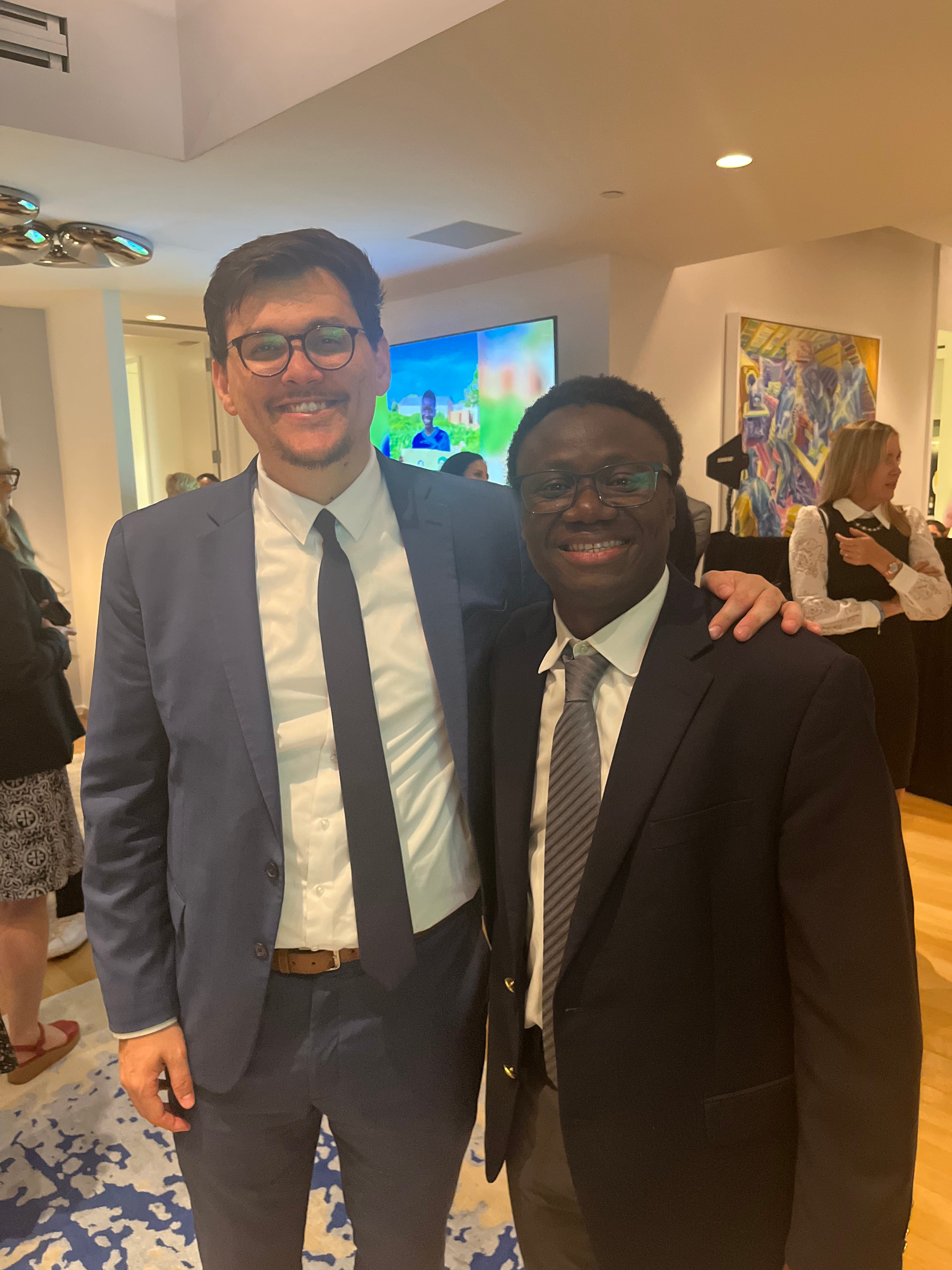
In addition to Nabs, I connected with several folks with histories in care, and that was the highlight of the whole experience. Hearing from folks who went through the system in their respective countries (many had far more harrowing experiences in care than I did) was moving in and of itself, but getting to know them on a personal-level was a joy. Several informally ‘adopted’ me as an older brother, which was an honor and brought me close to tears.
Now, there was a small exchange I had that I found...interesting. I was speaking with another American, a person who had worked for decades in child protection at the international level, working (I believe) on reducing reliance on institutional care. We spoke for several minutes, and there was two tidbits of the conversation that stuck out to me:
First, the person expressed surprise that the US was in attendance and that they were considering becoming a signatory of the Charter. I had to let them now that I was not, in fact, there in any official capacity and thus not representing the US.
Second, this person made a comment that they were surprised that an American — really, a person from a “developed country” — was chosen to speak for the event. This person was under the impression that this event was largely focused on ending orphanages and bringing “less developed” countries in line with the child welfare systems of the US, the UK, and other advanced nations.
I understood this point. Far be it from me to suggest that the problems I experienced in care were at all equivalent to the problems experienced by the folks I spoke who were raised in orphanages in Vietnam, Colombia, and other countries. The system in the US, as flawed as it is, has a far more formalized system that doesn’t rely on orphanages.
But that truth obscures the very real challenges that ‘advanced countries’ have with the complex issue of child welfare. Readers of this newsletter know that foster care in the US is in need of serious reform. The same can be said for the UK, Australia, France, New Zealand, and so many other countries. The children in these countries — and their families — also deserve a system that protects and nurtures them.
That’s why I find this movement so compelling, and so important. It brings the entire global community together to address an issue that is, as I often say, one of the least understood and thus least discussed issues in the world. We can all be engaged in the collective effort to strengthen families, protect children, and provide kids with loving homes. ‘Developed’ countries shouldn’t conclude that the job of protecting children is finished simply because they don’t rely on orphanages; we should hold ourselves to a far higher standard than that.
All told, this was a transformative experience, and I am grateful to have been invited to participate in it. More importantly, I am thankful to the UK’s leadership on this issue, for the early signatories, and for all the folks all over the globe fighting tooth and nail to build a better world for children and their families.
Next newsletter, I will return to my series on prevention by talking about kinship care. Until then, please be healthy and please be well.
Current Read(s):
This week, I’m reading several books.
A Certain Idea of France: The Life of Charles de Gaulle by Julian Jackson. I’ve heard a ton about de Gaulle through various other readings but never read much about the man himself, so I decided to fill that gap in knowledge by reading an 800-page biography on him.
One Day in the Life of Ivan Denisovich by Aleksandr Solzhenitsyn. I read this book in high school, but thought I might appreciate it more as an adult.
Wards of the State: The Long Shadow of American Foster Care by Claudia Rowe. I just got this book from the library, and so I’ll be digging into it this week.
I know I read a ton of interesting books on child welfare and family policy, and I’d like to write about all the stuff I’ve been learning from these books. By the end of the year, I plan on getting a newsletter out on that very topic, so if you find yourself wanting to know a bit more about a particular book, keep an eye on your inbox.
What’s going on in the world of child welfare?:
SC Launches Community Pathway to Prevent Need for Foster Care Entry (Live 5 News) — Thanks to federal funds, South Carolina is relying on the Parents as Teachers model to prevent kids from entering foster care
Minnesota Foster Youth Must Have Plan Before Aging Out of System, New Law Says (Sahan Journal) — Minnesota courts must now review transition plans to ensure foster youth are prepared for adulthood and aware of extended care.
Colorado Sees Jump in ‘Kinship’ Foster Families After State Increases Support, Simplifies Process (Denver Post) — Efforts to improve kinship care seem to be working in Colorado!
Georgia Nonprofit Helps Young Adults Find Stability After Aging Out of the Foster Care System (CBS News) — A cool nonprofit in Georgia is helping foster youth better navigate the transition into adulthood.
Frequent School Changes Harm California Foster Youth. How Better Data Can Help (EdSource) — The American Institutes for Research (AIR) did some great research on school mobility among foster youth in the California. This article spells out their findings, but AIR also put together an interactive map (I love a data-rich interactive map) that can help policymakers and advocates understand this issue more.
Housing Development for Youth Aging Out of Foster Care Coming to Knoxville (WATE) — There’s a lot to like about this, but what I find very cool about this project is that youth in these homes will be provided a “$1,000 move-in stipend to purchase furnishings, art, and room decor to give them a sense of ownership over their new chapter,” plus a mentor to help them shop and set up their new place.
Huntsville Nonprofit Launches $7.5 Million Plan to House Alabama Foster Youth (Yellowhammer News) — More great new in the ‘housing for youth aging out of care’ genre!